

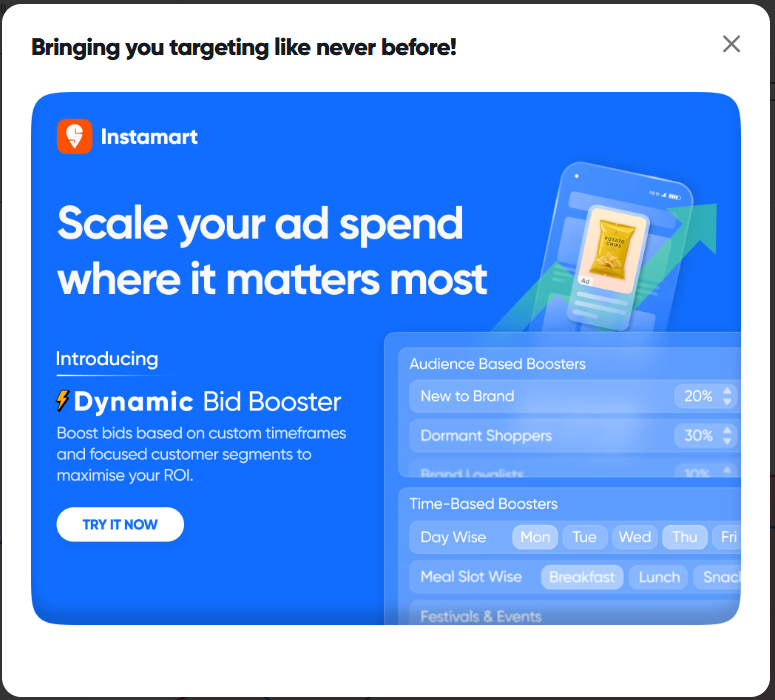
Swiggy Instamart is adding another layer of control to its advertising platform with Dynamic Bid Boosters, allowing brands to adjust their bids based on specific audiences and shopping moments.
Instead of relying on a single bid strategy across a campaign, advertisers can now use audience and time-based signals to potentially increase bids where conversion opportunities are more relevant.
What Are Dynamic Bid Boosters?
Dynamic Bid Boosters allow advertisers to create additional bid boosts based on two key dimensions:
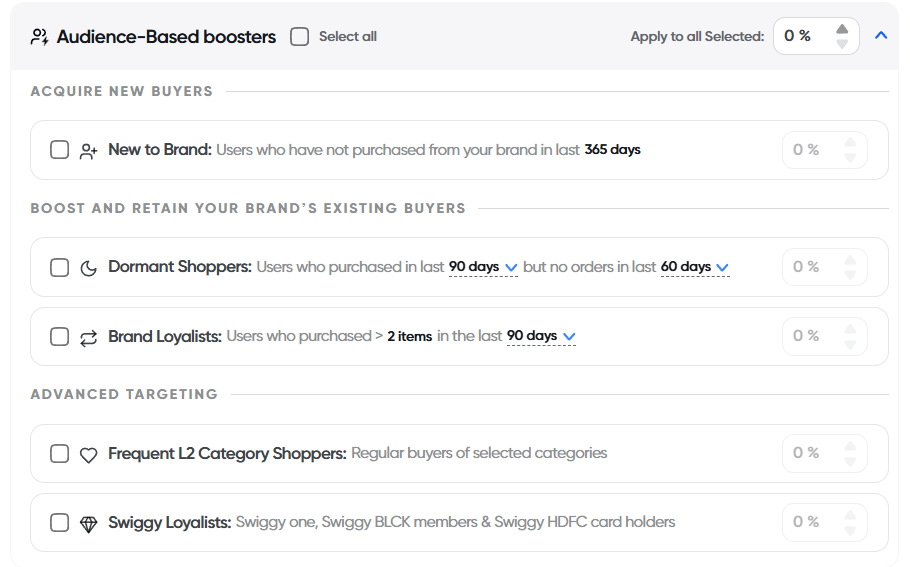
1. Audience-Based Boosters
Advertisers can select specific shopper segments, including:
- New to Brand
- Dormant Shoppers
- Brand Loyalists
- Frequent L2 Category Shoppers
- Swiggy Loyalists
This gives brands the ability to differentiate their bidding strategy based on the type of shopper they are trying to reach.
For example, a brand launching a new product could choose to increase bids for New-to-Brand shoppers, while another brand could focus on re-engaging dormant customers.
2. Time-Based Boosters
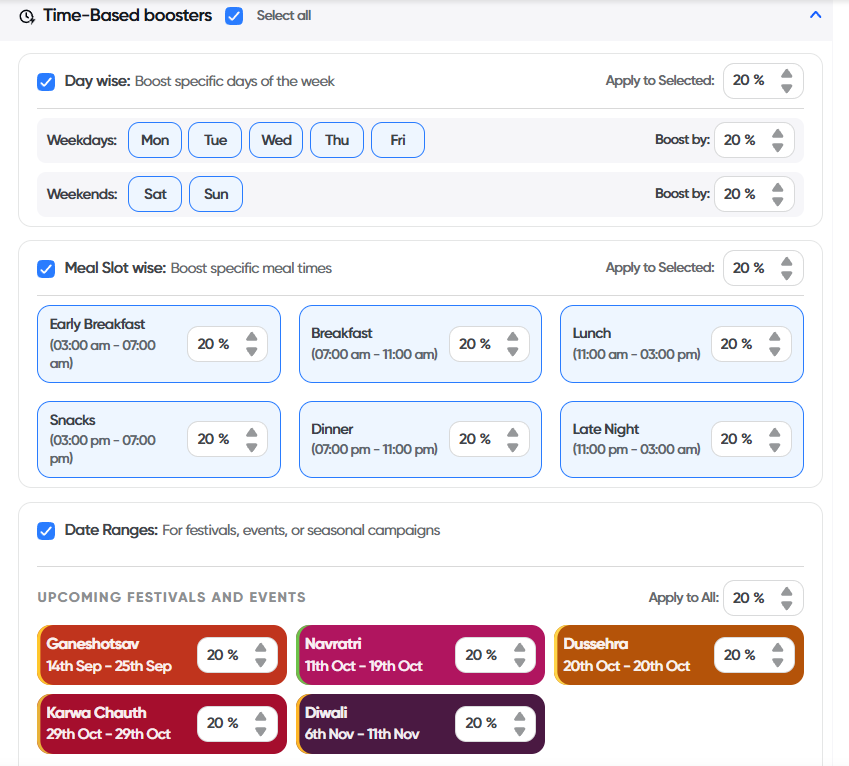
Brands can also apply bid boosters based on specific time parameters:
- Day-wise
- Meal Slot-wise
- Date Ranges
This can be particularly relevant for categories where shopping behaviour changes throughout the day or around specific occasions.
How Does Dynamic Boost Work?
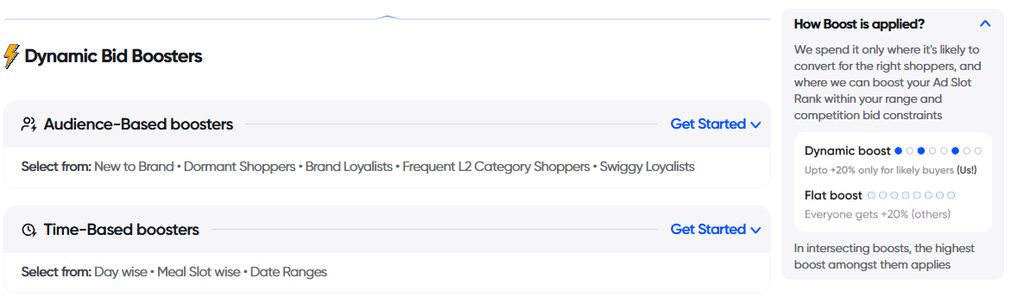
One of the important differences is that the dynamic boost isn’t simply applied to every shopper.
According to the platform, the boost is applied where users are likely to convert, while remaining within the campaign’s Ad Slot rank, bid range and competition bid constraints.
There is also an important rule when multiple boosters overlap:
The highest applicable boost is used.
For example, if a campaign has both an audience-based and time-based booster active for the same shopper, the system applies the highest relevant boost rather than stacking the boosts.
Dynamic Boost vs Flat Boost
Advertisers also have the option of using a Flat Boost.
With a flat boost, the increase applies broadly across the campaign.
Dynamic Boost, on the other hand, is designed to focus the additional bid on shoppers who meet the selected targeting conditions.
This creates two different approaches:
Flat Boost: Increase bids broadly.
Dynamic Boost: Increase bids selectively based on audience and timing.
Where Is It Available?
Dynamic Bid Boosters are available across Swiggy Instamart Item Ads, with one exception:
Last Minute Add-On Ads are currently excluded.
Why This Matters for Q-Commerce Advertising
Q-commerce advertising is gradually moving beyond basic campaign-level optimisation.
Previously, advertisers primarily looked at metrics such as:
Spend → Sales → ROAS → Bid
Dynamic Bid Boosters introduce another layer:
Audience → Time → Intent → Bid
That means advertisers can potentially build more granular strategies around who they want to acquire, when they want to reach them, and how aggressively they want to bid.
The key for brands will be testing these segments and time windows against actual incremental performance rather than simply increasing bids.
The next phase of q-commerce advertising isn’t just about bidding more. It’s about bidding more selectively.
Follow me on Linkedin for more content like this or read more blogs.